
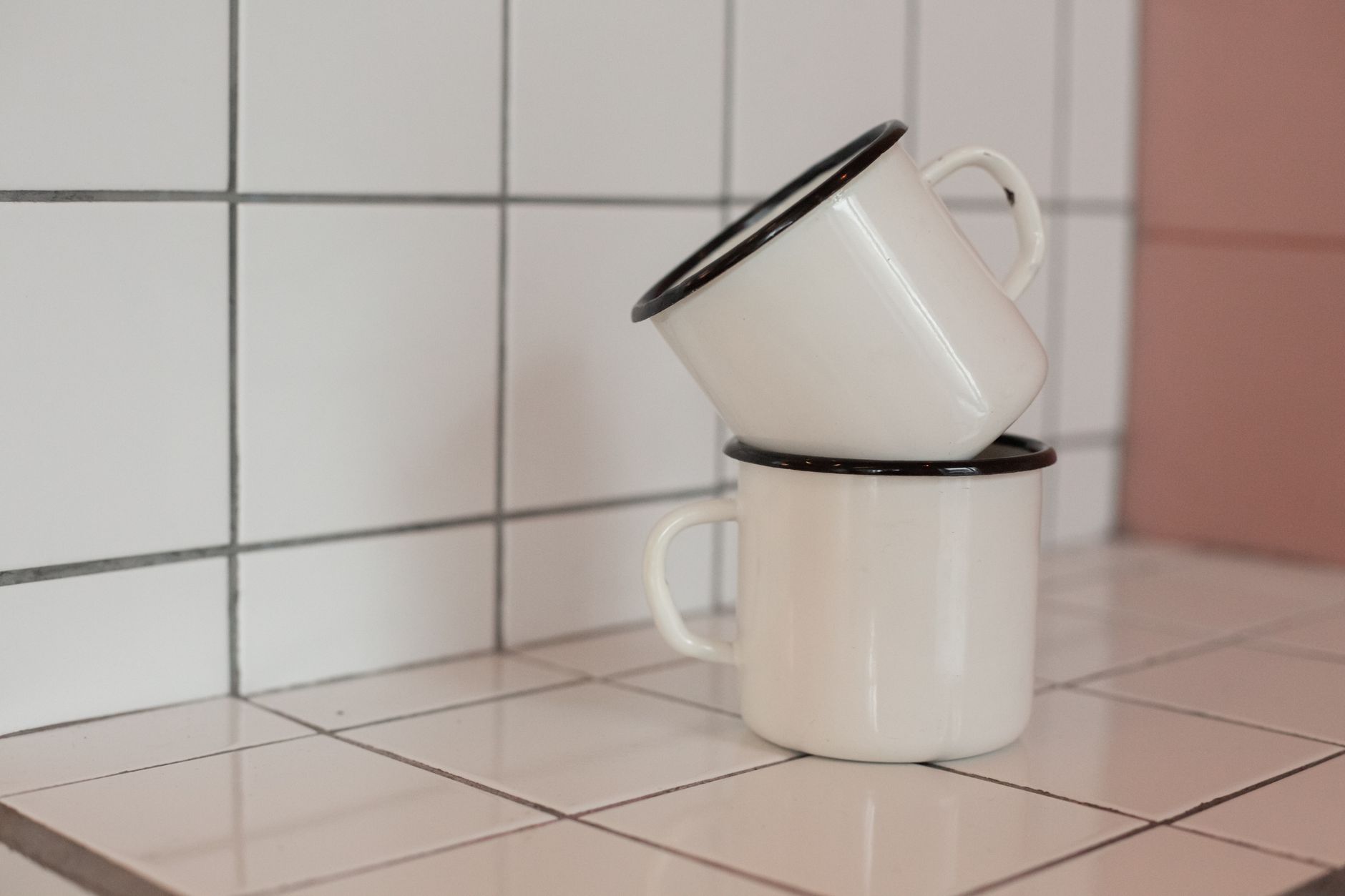
Vintage enamelware is one of the most satisfying things to rescue from an op shop basket. Those speckled blue-and-white mugs, cream-enamelled stockpots, and graniteware pitchers from the early-to-mid twentieth century were built to work hard, and most of them still can. The problem is that decades of use, damp storage, or misguided cleaning leave many pieces looking worse than they are. Rust spots, mineral stains, and surface grime can all be addressed at home without specialist tools or harsh chemicals, as long as you understand what enamelware actually is and where its limits lie.
What enamelware is made of, and why that matters
Enamelware is metal (usually steel or cast iron) coated with a fused glass enamel finish. The coating is glass, which means it's non-porous and naturally resistant to staining, but it's also brittle. Chips happen. When the enamel cracks or flakes away, the exposed metal underneath rusts quickly. This distinction between enamel damage and metal damage shapes every cleaning decision you make.
Never use abrasive scrubbers like steel wool on enamelware. The surface scratches, the glass layer weakens, and the piece deteriorates faster than it would have if you'd left the grime alone. Stick to soft cloths, nylon brushes, and gentle soaks, and you'll get excellent results on most pieces.
Removing surface grime and yellowing
Start with the basics. Fill the piece with warm water and add 2 tablespoons of baking soda. Bring it to a gentle simmer on the stove for 10 to 15 minutes, then leave it to cool in the liquid. This loosens decades of built-up residue without touching the enamel surface itself. For exterior grime, a paste of baking soda and a few drops of dish soap applied with a soft cloth works on most marks.
Yellowing on white enamel responds well to a soak in diluted white vinegar. Fill the piece with a 50/50 mix of white vinegar and water, leave it for 30 minutes, then rinse thoroughly. Don't leave vinegar in contact with the metal rim or any chipped areas, because the acid speeds up rusting on exposed steel. Rinse promptly and dry completely.
Tackling rust spots on and around the enamel
Rust on enamelware appears in two places: at the chip site, where bare metal is exposed, and along the rim, where the enamel coating is thinnest and wear accumulates. Each needs a slightly different approach.
For surface rust spots on the rim, make a paste from cream of tartar and a small amount of hydrogen peroxide. Apply it with an old toothbrush, leave it for 20 minutes, then scrub gently and rinse. For deeper rust at a chip site, use a cotton bud dipped in naval jelly (a phosphoric acid gel sold at hardware stores) and apply it only to the rusted metal, keeping it off the surrounding enamel. Neutralise with baking soda solution, rinse, and dry immediately.
Dry completely. Every time. Wet enamelware sitting on a shelf is the fastest route back to rust.
Dealing with chips and deciding what to restore
Not every chip needs fixing. Small chips on the exterior of a decorative piece don't affect function or safety. Chips on the interior of cookware are a different matter. Exposed metal on a cooking surface can leach into food, so a heavily chipped interior pot is best retired to display use, or replaced.
For exterior cosmetic repairs, enamel repair paint is available from hardware stores in a limited range of colours. It bonds to the metal and provides a waterproof seal, though it won't match the original gloss exactly. Clean the chipped area, remove any rust with cream of tartar paste, let the piece dry for 24 hours, then apply the repair paint in thin coats. Two coats gives better coverage than one thick application.
If a piece is particularly valuable, consider whether a professional conservator makes more sense. For most op-shop finds, the DIY approach is entirely appropriate and doesn't compromise the piece's collectible character. If you're building a collection worth tracking, the guide on how to read vintage jewellery hallmarks and maker's marks demonstrates the same principle in a related context: understanding a piece's provenance shapes how much effort restoration deserves.
Stain removal for specific problems
Enamelware picks up a few specific stains worth knowing:
- Tea and coffee staining inside mugs: Fill with boiling water and two denture-cleaning tablets. Leave overnight, rinse in the morning. This works on almost every tea stain without any scrubbing.
- Mineral deposits from hard water: Soak in the 50/50 white vinegar solution mentioned above, or rub the deposit gently with half a lemon dipped in salt.
- Burnt-on food residue: Simmer with water and baking soda first. If that doesn't shift it, a wooden spatula (never metal) can ease the residue away from a softened surface without scratching.
Storing restored enamelware so it stays in good condition
Storage habits matter as much as cleaning habits. Stack pieces with a folded tea towel or felt pad between them to prevent chips from stacking pressure. Keep enamelware in a dry cupboard rather than above the stove, where condensation and heat cycling accelerate wear. If a piece is purely decorative, a light coat of rust-inhibiting clear coat on any exposed metal areas gives long-term protection without altering the appearance.
The approach to storing enamelware parallels the broader principles of preserving fragile collectibles. If you collect vintage textiles alongside your enamelware, the same careful attention to environment and physical contact applies, and the guide on how to store vintage textiles so they don't deteriorate covers the logic well.
Which pieces are worth restoring
Not all enamelware is equally valuable or equally rewarding to restore. Graniteware from the 1880s to 1930s, particularly swirl patterns in blue, green, or brown, attracts serious collector interest in Australia. Pieces marked with a country of origin (Germany, Czechoslovakia, or France) date to before 1949, which narrows the manufacturing period and adds context. Unmarked pieces made in Australia, like those produced by local mid-century manufacturers, are less documented but genuinely part of the country's domestic history.
Condition still governs value more than age. A later piece in perfect enamel with strong colour commands more at a fair than an older piece with a cratered interior. Restoration that stabilises a piece without altering its character is always worthwhile. Restoration that obscures age indicators, like painting over a manufacturer's mark, reduces both the piece's authenticity and its worth to a knowledgeable buyer.
Pick up a chipped piece, clean it properly, seal the rust, and give it a dry home. Most enamelware that looks tired is just dirty. An afternoon of careful attention is usually enough to bring it back.