
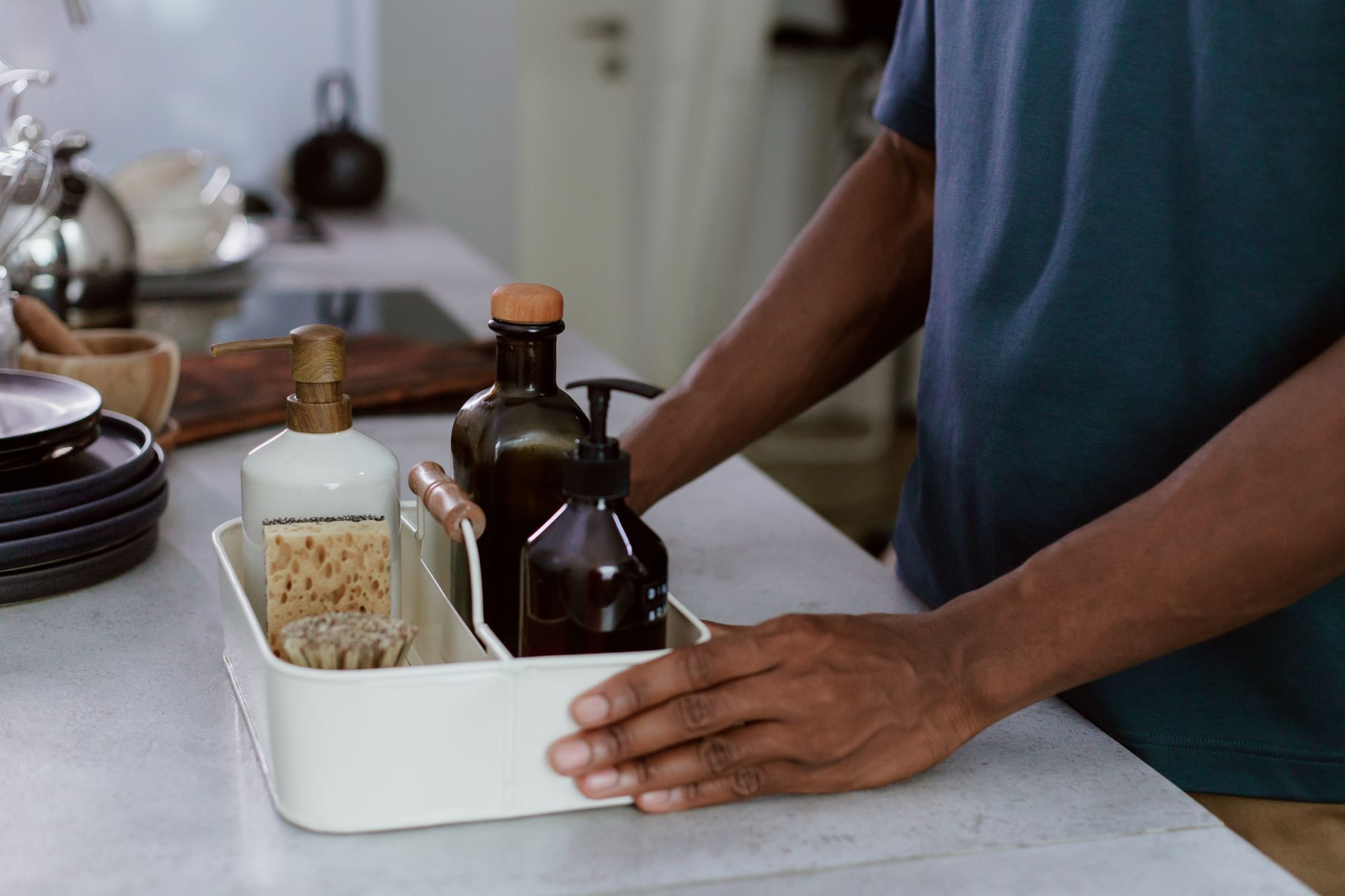
Most households keep a dozen or more cleaning products under the sink, each in its own single-use plastic bottle, each containing a cocktail of ingredients that don't appear anywhere on the label. Greening your cleaning routine is one of the most practical steps you can take toward living more consciously, and it costs less than the supermarket habit it replaces. You don't need specialty products or a minimalist pantry. Three or four ingredients handle most of what those bottles claim to do.
Why conventional cleaning products are worth questioning
Many mainstream cleaning sprays, bleaches, and detergents contain synthetic fragrances, surfactants, and preservatives that wash directly into waterways after use. Australia's sewage treatment infrastructure removes some contaminants, but not all. Phosphates, for example, promote algae growth in rivers and bays. Ammonia and chlorine-based products release fumes that affect indoor air quality, which matters in winter when windows stay shut.
The packaging problem compounds the chemistry problem. A standard cleaning cupboard generates 10 to 15 plastic bottles per year per household. Most of those bottles aren't recycled; they go straight to landfill.
Switching doesn't mean compromising on clean. It means understanding what you actually need.
The four ingredients that do most of the work
White vinegar, bicarbonate of soda, castile soap, and washing soda cover the overwhelming majority of cleaning tasks in any home. Each one is cheap, widely available in bulk, and biodegradable.
White vinegar cuts grease, dissolves mineral deposits, and disinfects surfaces. Diluted 1:1 with water in a reusable glass spray bottle, it handles benchtops, stovetops, and bathroom tiles. The smell dissipates within minutes of drying. Don't use it on natural stone surfaces like marble or granite; the acidity etches the surface over time.
Bicarbonate of soda is a mild abrasive and odour absorber. Sprinkled on a damp sponge, it scrubs sinks and bath enamel without scratching. Left open in the fridge, it absorbs smells. Combined with vinegar, it produces a fizz useful for clearing slow drains, though the reaction is brief so work quickly.
Castile soap, made from plant oils rather than petroleum, lathers and lifts dirt from floors, dishes, and surfaces. Dr. Bronner's is the most widely distributed brand in Australia, available at health food stores and most supermarkets. A 1 litre bottle diluted properly lasts months. Washing soda (sodium carbonate, not to be confused with bicarbonate) is a stronger alkali for laundry boosting and heavy grease.
Room-by-room swaps that actually hold up
The kitchen is the best place to start. Replace your multipurpose spray with a vinegar and water solution, add a few drops of tea tree oil if you want added antimicrobial action, and decant it into a glass bottle. For dishwashing, a solid dish soap bar or a concentrated castile liquid reduces plastic by around 90% compared to standard liquid detergent. For the dishwasher, commercial eco-certified tablets (look for the Good Environmental Choice Australia certification) perform as well as conventional brands in independent testing.
In the bathroom, bicarbonate paste handles soap scum on tiles and basins. The toilet can be cleaned with a combined vinegar pour and bicarbonate of soda scrub. If you're managing mould, hydrogen peroxide (3%, available at pharmacies) applied directly and left for 10 minutes outperforms most commercial mould sprays without the chlorine fumes.
For floors, a few drops of castile soap in warm water cleans tiles and sealed timber. Skip the commercial mopping products entirely. They're mostly water and fragrance anyway.
Making the switch sustainable over the long term
The main reason people revert to conventional cleaning products is convenience. The fix is reducing the friction of the eco routine. Buy bicarbonate of soda and washing soda in bulk bags rather than small supermarket boxes. Decant white vinegar from 2 litre bottles. Keep your spray bottles labelled and stored visibly. Once the system is set up, refilling takes less time than a supermarket run.
Reusable cloths replace paper towel completely. Old cotton t-shirts cut into squares work as well as commercial microfibre cloths and don't shed synthetic fibres into the wash. Speaking of the wash: if you're already working on reducing plastic in other parts of the home, the laundry is one of the most plastic-heavy rooms to address. Laundry sheets (dissolvable strips that replace liquid detergent) have improved significantly over recent years and generate almost zero packaging waste.
One thing worth noting: scent is often what makes a cleaning product feel like it's working. Essential oils solve this. Add 10 to 15 drops of eucalyptus, lavender, or lemon oil to your spray bottles for fragrance and a mild antimicrobial boost. Australian-grown eucalyptus oil in particular is a legitimate cleaning agent, not just a scent, and cuts through grease on its own.
What to do with the products you already have
Don't pour conventional cleaners down the drain. Finish them first, then transition. Chemical products poured in bulk into the sewage system cause exactly the kind of harm this switch is meant to avoid. Once a bottle is empty, rinse it and check whether your local council's household chemical drop-off accepts it. Many do. The ChemClear program and local transfer station events handle household chemicals in most Victorian municipalities.
Transition at the rate of one product at a time. Replace the spray first. Then the dishwashing liquid. Then the bathroom cleaner. Done over a few months, the shift costs nothing extra and the habit sticks.
A clean home and a lighter environmental footprint aren't in conflict. The ingredients to reconcile them have been sitting in pantries for generations.