
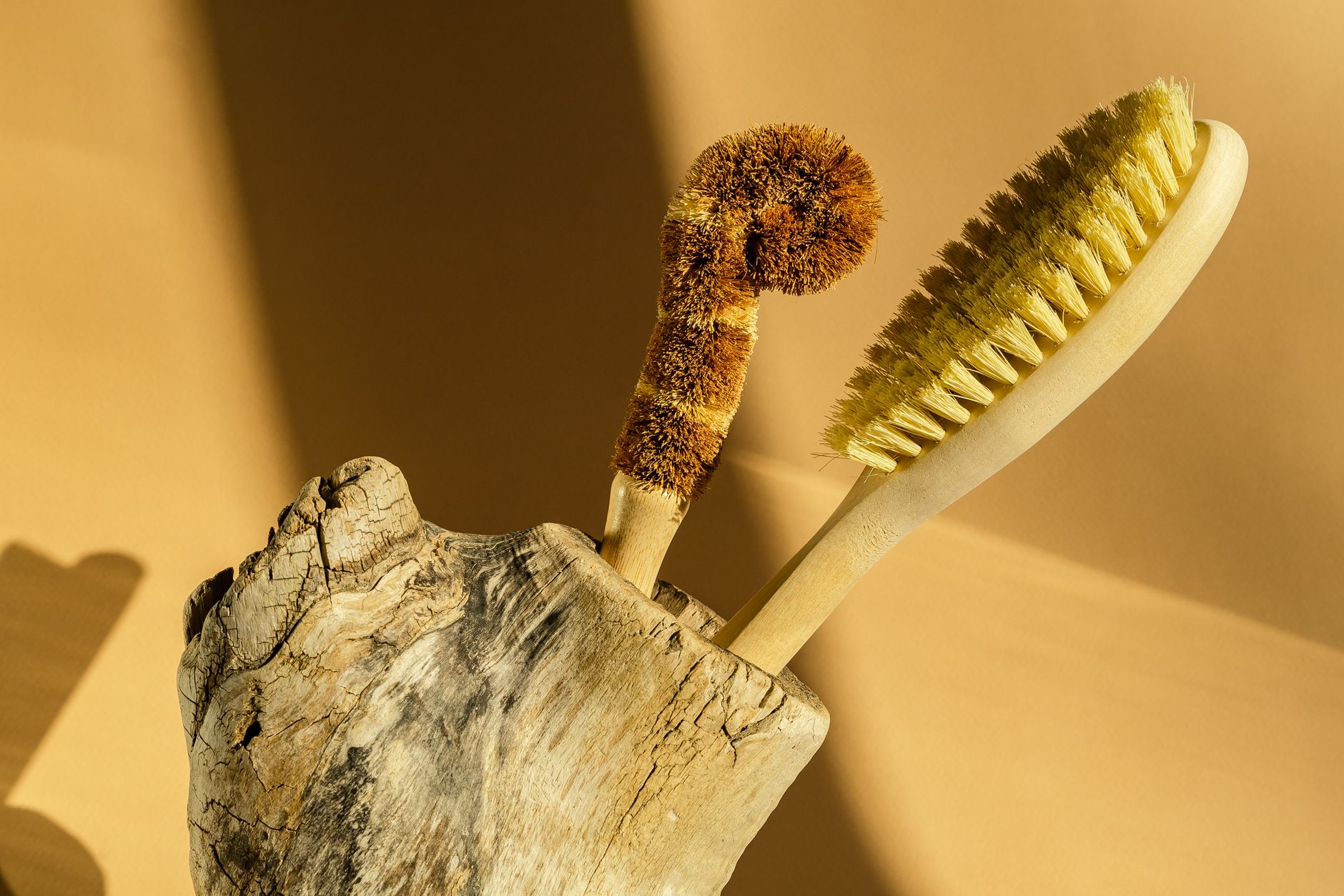
Eco-friendly cleaning tools are where sustainable living gets genuinely practical. Unlike single-use swaps that still end up in landfill, a well-made wooden brush or natural-fibre mop can outlast a dozen of its plastic counterparts. The challenge isn't finding them. It's knowing what separates a tool worth buying from one that just looks good in a linen cupboard.
Why the tool matters as much as the product
Most conversations about greening a cleaning routine focus on the products inside the bottle. That's worth doing, but the tools carrying those products deserve equal attention. A cheap synthetic sponge sheds microplastics into the water supply every time you squeeze it. A disposable mop head adds to plastic waste with every swap. The cumulative toll across a household is significant, and it's almost entirely avoidable.
If you've already started greening your cleaning routine without harsh chemicals, upgrading your tools is the natural next step. It completes the picture.
What to look for when buying cleaning tools
Durability is the first test. A tool that falls apart in three months isn't sustainable, regardless of what it's made from. Look for construction that can be repaired or refreshed: a brush with replaceable heads, a mop with a washable pad, a cloth that survives 200 machine washes without pilling.
Material origin matters too. Genuine natural fibres like coconut coir, sisal, and loofah biodegrade at end of life. Bamboo handles are fast-growing and low-input. Recycled stainless steel scrubbers outlast steel wool by years and don't rust or shed. These aren't niche materials. You'll find them at Australian zero-waste retailers and increasingly at independent homewares stores.
Avoid tools marketed as "natural" that pair bamboo handles with synthetic bristles you can't remove. The composite materials make proper disposal harder, not easier. Check the full product before committing.
Room-by-room guide to better tools
Kitchen
The kitchen generates the most daily cleaning and, typically, the most tool waste. Replace synthetic sponges with cellulose cloths or natural sea sponges. Both clean effectively and both compost when they're spent. A wooden dish brush with a replaceable coconut-fibre head handles most washing-up jobs and dries faster than a sponge, which slows bacterial growth between uses.
For stubborn pots, a stainless steel scrubber lasts years. The oval-shaped compressed ones sold by Australian brands like Beeswax Wrap Co and similar zero-waste retailers hold their shape through heavy use. Buy one. Replace it in two years, not two weeks.
Bathroom
Bathroom tools often sit damp for hours, which means material quality matters more here than anywhere else. A toilet brush with a replaceable sisal head handles the job without plastic bristles breaking off and accumulating. Teak or bamboo handled bathroom brushes resist moisture better than most timber alternatives because of their natural oil content.
Microfibre cloths are a smarter bathroom surface choice than paper towel, and a set of 12 replaces hundreds of single sheets over their lifetime. Wash them in a Guppyfriend washing bag to catch microfibre shed during laundering. It's an extra step, but it keeps synthetic particles out of waterways.
Floors and surfaces
Mops are where plastic waste is particularly easy to eliminate. A traditional string mop in cotton or a flat mop with a washable cotton or bamboo-blend pad both clean hard floors without generating disposable waste. The flat mop format works well on tiles, timber, and polished concrete. Wring out the pad, machine wash it, and it's ready again.
For surface wiping, cut-up old cotton t-shirts and towels work as well as any commercial cloth. It costs nothing and keeps usable textile out of landfill. This connects directly to the broader practice of holding onto household items Australians routinely throw away before they've truly served their purpose.
How to assess longevity before you buy
Three questions worth asking before purchasing any cleaning tool:
- Can you replace just the worn part, or does the whole tool become waste when one component fails?
- Is the construction solid enough that it won't deform or split within a season of regular use?
- Does the supplier offer any information on end-of-life disposal or composting suitability?
A tool that answers yes to the first two is almost always worth the higher upfront cost. Over 18 months, a $22 wooden dish brush with replacement heads costs less than the same number of cheap plastic brushes replaced every six weeks.
Buying locally and buying once
EcoSoul Collective stocks a rotating selection of natural-fibre cleaning tools, wooden brushes, and reusable cloths sourced from Australian makers and small-batch importers. Buying locally from independent stores keeps your spending in the community and gives you the chance to assess quality in person before committing. Most sustainable cleaning tools look similar online. Holding one tells you far more.
The principle here is simple: buy the best version you can afford, once, and maintain it. A wooden brush rehung to dry after use lasts years longer than one left sitting in pooled water. A cloth rinsed properly between uses stays effective for months. The tool is only as good as the habit around it.
A note on certified vs. well-made
Certifications like GOTS (Global Organic Textile Standard) for cloths and FSC (Forest Stewardship Council) for timber handles are meaningful signals, not marketing. They indicate third-party verification of material sourcing and production standards. They don't guarantee a better product, but they narrow the field quickly when you're comparing similar-looking options at different price points.
When certification isn't available, look for transparent sourcing information on the brand's website and evidence of real use: reviews from people who've washed the cloth 100 times, or forums where zero-waste shoppers compare how brushes hold up. That lived-in evidence matters more than packaging claims.
Switching your cleaning tools isn't a dramatic overhaul. Replace items as they wear out rather than discarding everything at once. Within a year, most households find they've quietly eliminated the bulk of single-use plastic from their cleaning routine without a single dramatic gesture.