
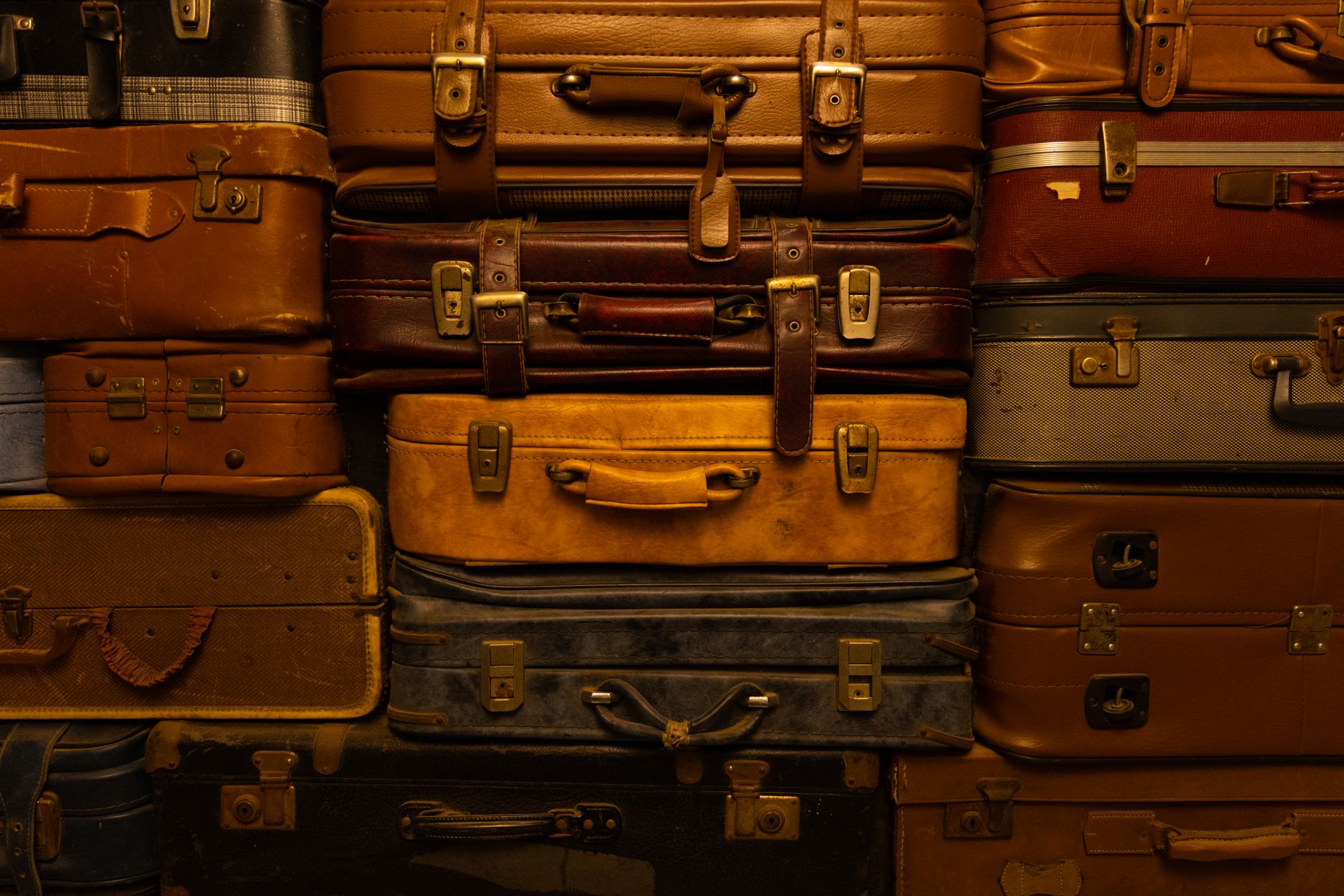
Repurposed old suitcases are one of the most satisfying upcycling projects a home decorator can take on. Vintage luggage is easy to find at op shops, estate sales, and weekend markets, and it already comes with the kind of worn patina, brass hardware, and layered history that designers spend serious money trying to replicate. The good news is that you do not need specialist skills or expensive tools. What you need is a good eye, a bit of patience, and a clear idea of where a piece will live in your home.
Why old suitcases work so well as storage
Luggage was built to hold things securely, which means it translates naturally into storage. The interior lining is usually intact and often surprisingly clean, and the rigid shell protects contents from dust. Older suitcases, particularly those from the mid-twentieth century, were made from materials that have aged beautifully: pressed fibre, leather trim, canvas, and timber-framed trunks. Each piece is genuinely one of a kind, which makes it a very different proposition from a flat-pack storage cube off the shelf.
Stacked suitcases also work as sculptural objects in their own right. Even before you open them, a column of three vintage cases in coordinating tones reads as a considered design choice rather than a storage solution. This dual function, both decorative and practical, is what makes them such a rewarding repurposing project. If you enjoy this kind of thinking about layering found objects in a space, it pairs well with the broader approach explored in how to style a vintage bedroom without it feeling dated.
Finding the right suitcases
Before you start any transformation, the sourcing step matters. Look for cases with solid structure: check the corners, the hinges, and the base. A little surface scuffing or faded fabric is fine, but avoid anything with a warped frame or a base that flexes when you press it. Smell the interior, too. Musty odours can usually be resolved, but persistent mildew is a harder problem.
Hard-shell cases from the 1950s through to the early 1980s are the most versatile for repurposing. They tend to have better structural integrity than softer fabric luggage, and their proportions suit a wider range of uses. Look for variety in size: a large trunk as a base, a medium case in the middle, and a smaller carry-on at the top creates an instantly appealing stack. Local markets near Belgrave and throughout the Dandenong Ranges region regularly turn up interesting pieces, as do Facebook Marketplace listings, Gumtree, and council hard rubbish collections.
Cleaning and preparing your suitcase
Whatever you plan to do with a suitcase, a thorough clean is the first step. For the exterior, a damp cloth with a small amount of mild dish soap handles most surface grime. Leather trim can be treated with a conditioning cream after cleaning. For fabric-covered cases, a soft brush attachment on a vacuum handles dust and loose debris before you wipe down with a slightly damp cloth.
For the interior, remove any loose lining that is torn beyond saving, but keep intact lining in place. A light spray of white vinegar diluted in water, left to dry fully with the case open in the sun, handles most odours. Bicarbonate of soda left in the case overnight works well for stronger smells. Once it is clean and dry, the case is ready for whatever purpose you have in mind.
Practical ways to use repurposed suitcases at home
Bedside table with hidden storage
A medium-sized hard-shell case placed on its side and mounted on simple hairpin legs becomes a bedside table with storage inside. This is one of the more involved projects, as it requires attaching legs to the base of the case, but it is manageable with basic hardware from any home improvement store. The lid becomes a top surface for a lamp and a book, and the interior holds extra blankets, seasonal clothing, or anything else you want close at hand but out of sight.
Stacked display storage
This is the simplest project and often the most visually striking. Stack three or four suitcases of descending size and secure them with luggage straps or a discreet bolt through the stack. Place them in a corner of a living room or bedroom. The top surface functions as a small display shelf, and each case in the stack stores something: books, spare linen, children's toys, craft supplies. The whole thing looks deliberate and characterful without requiring any structural modification.
Under-bench seating or ottoman
A large, sturdy trunk-style suitcase placed in front of a sofa or at the foot of a bed makes an excellent ottoman. Add a piece of foam cut to fit the top, cover it with fabric of your choosing, and attach it with a few staples or a strip of adhesive. The result is a padded surface you can rest your feet on, with storage inside for throws and cushions. This approach echoes the same thinking behind repurposing old doors into statement home pieces: the best projects find a new function that suits the material's existing strengths.
Wall-mounted display shelf
Remove the lid from a smaller suitcase, mount the base to the wall with the open side facing out, and you have a shallow display shelf with a curved interior. This works particularly well in a hallway or home office, and the original lining becomes a subtle backdrop for whatever you place inside. Keys, books, small plants, and framed photographs all suit this kind of display.
Children's toy storage
A set of vintage suitcases in different sizes is one of the most practical toy storage solutions you can put together. Children tend to enjoy the tactile quality of vintage luggage, and having a dedicated case for different categories of toys, one for building blocks, one for art supplies, one for dress-ups, makes tidy-up time more intuitive. The cases stack neatly when not in use and look far more interesting than plastic tubs.
Finishing touches that lift the result
A few small additions can take a repurposed suitcase from good to genuinely impressive. Replacing worn clasps or hinges with polished brass hardware from a specialty store upgrades the piece considerably and costs very little. A piece of quality contact paper or wallpaper inside the lid turns a plain interior into a decorative element. If you want to paint the exterior, a chalk-based furniture paint adheres well to most suitcase surfaces and gives a matte, vintage-appropriate finish. Always sand lightly and prime first for the best result.
Repurposing old suitcases sits at the heart of what conscious, creative decorating looks like in practice. It keeps a useful object out of landfill, gives your home something genuinely unique, and tells a small story every time a guest notices it. That is a better outcome than anything a mass-produced storage solution can offer.