
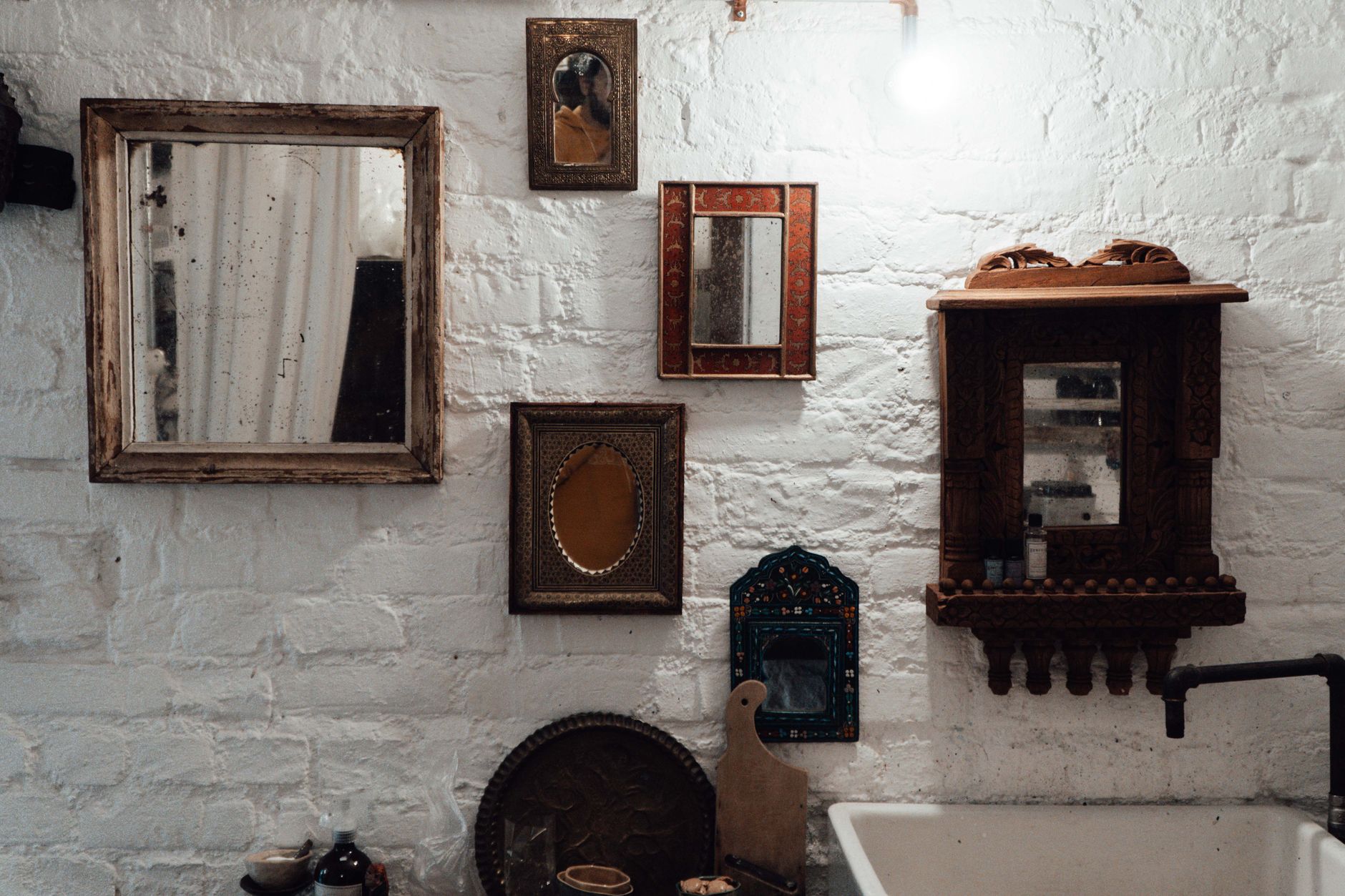
Old mirrors are one of the most underestimated materials in repurposed design. They turn up constantly at op shops, estate sales, and hard rubbish collections, often in heavy ornate frames that nobody quite knows what to do with. The glass is still good. The bones are solid. They just need a different purpose.
The projects below don't require specialist skills or expensive equipment. Most need only basic hand tools, a bit of patience, and the willingness to see a tired object as a starting point rather than a problem.
Assessing what you've got before you start
Not every old mirror suits every project. Before you begin, check three things: the condition of the glass, the construction of the frame, and the size of the piece.
Run your hand across the mirror surface in strong natural light. Cloudy patches, dark spots along the edges, or a silvery haze spreading inward are signs of desilvering, where the reflective coating behind the glass has begun to fail. A mirror in this condition won't give a clean reflection, but it's perfect for projects where the glass is cut away entirely or replaced with another material. It doesn't disqualify the frame.
The frame itself matters most. Solid timber frames, even under layers of gold spray paint, are worth rescuing. Tap the corners: a tight, barely audible knock means solid joinery. A hollow clunk suggests the frame is chipboard or MDF, which won't hold screws or take paint as well. That said, chipboard frames can still work for lightweight decorative projects.
Mosaic tray from a bevelled mirror
Small bevelled mirrors, the kind with a wide flat border and a central reflective panel, make excellent bases for decorative trays. The bevelled edge already functions as a rim. You're adding grip and surface interest without changing the structure.
Clean the mirror glass thoroughly with white vinegar and a lint-free cloth. Then choose your mosaic material: broken ceramic tiles, beach-polished glass, fragments of old crockery, or flat river stones all work. If you're sourcing broken tiles, check the ideas for repurposing old ceramic tiles on this site first, as some of the cutting and sorting techniques apply directly here.
Use tile adhesive to fix your pieces onto the bevelled border, leaving the central mirror panel clear. Grout once dry, wipe back the excess, and seal the grout with a standard waterproof grout sealer. The finished tray works beautifully on a bathroom vanity, bedside table, or as a display base for candles and small objects.
Pinboard or noticeboard from a large frame
A large, solid mirror frame, especially one in a classic rectangular shape, makes an excellent noticeboard. Remove the mirror glass carefully (wear gloves and score the backing with a utility knife before attempting to lift it free). You can either donate the glass at a glazier's offcut bin or repurpose it separately.
Cut a piece of 12mm cork sheet or thick upholstery foam to fit the frame opening. Wrap the cork or foam in a piece of fabric that complements the frame. Linen, vintage ticking stripe, or a bold cotton print all work well. Pull the fabric taut over the backing, staple it at the back, then press the wrapped panel firmly into the frame recess and secure with glazing pins or small mirror clips.
Paint or refinish the frame before reassembling if you want a cohesive finish. A flat chalk paint in a contrasting colour lets the frame shape do the talking. Hang the finished board in a home office, kitchen, or entry hallway. It functions better than a corkboard bought new, and it carries far more character.
Wall-mounted jewellery display
A narrow mirror frame, particularly one from an old wardrobe door or a hall mirror, is the ideal depth and proportion for a wall-mounted jewellery organiser. The frame provides a finished edge. The interior becomes the working surface.
Remove the glass and back the frame opening with a sheet of fine galvanised wire mesh (available from hardware stores by the metre). Staple or tack the mesh to the back of the frame at 3cm intervals so it sits taut and flush. Add small cup hooks along the bottom edge of the frame for necklaces and bracelets. Earrings thread directly through the mesh.
The mesh backing also gives you space to tuck sprigs of dried flowers, notes, or small polaroids into the grid. It's a display piece as much as a practical organiser, and it takes less than two hours to build.
Tabletop from a round or oval mirror
A round or oval mirror in good condition, particularly one with bevelled edges, can become the top of a small occasional table. This project works best when you have a base to match: a turned timber pedestal, an old cast-iron urn, or even a stack of reclaimed bricks sealed and levelled.
Secure the mirror to its base using clear mirror adhesive (sold at glaziers and hardware stores). Don't use standard construction adhesive, as many contain solvents that attack the silver backing. Let the adhesive cure for 48 hours before setting anything on the surface. A small side table built this way adds genuine presence to a reading nook or bedroom corner, and it's the kind of piece that's impossible to replicate in a furniture chain.
If you enjoy the process of transforming overlooked materials into functional furniture, the techniques involved in working with reclaimed wood pair naturally with mirror and glass projects, particularly when building table bases or frames from scratch.
Decorative mirror wall cluster
Not every mirror needs a new function. Sometimes the transformation is purely visual: taking a collection of mismatched frames in different sizes and finishes, unifying them, and hanging them as a deliberate composition.
Collect 5 to 9 old mirrors in varied shapes, then choose a single paint colour to tie the frames together. A deep dusty green, warm terracotta, or matte black works on almost any frame style. Sand lightly, apply two coats of chalk or milk paint, then arrange the grouping on the floor before committing to the wall.
The arrangement should feel balanced but not symmetrical. Work from a central anchor piece outward, keeping the gaps between frames consistent (roughly 5 to 8cm). Use a level on each frame and drive picture hooks into wall studs where possible. The finished cluster reads as a single intentional installation rather than a random collection.
What to do with desilvered glass
Desilvered mirror glass, the kind with clouded patches and dark edges, has its own particular beauty. It's worth setting aside rather than discarding.
Glaziers can cut desilvered glass to size for you inexpensively. Small cut pieces work as botanical display bases under glass domes, as jewellery photography surfaces (the partial reflection adds depth without overwhelming the subject), or as backing panels inside shadow boxes. Larger pieces can be leaned against walls as textural backdrops in a styled shelf or display cabinet. The aged, uneven surface catches light differently at different times of day, and that unpredictability is exactly what makes it interesting.
Repurposed mirror projects sit comfortably alongside other material transformations. If you've already worked through repurposing old window frames, you'll find many of the same principles apply: assess the structure first, decide whether to strip or preserve the existing finish, and let the material's original character guide the final form rather than fighting it.
Where to find old mirrors worth transforming
Op shops are the most consistent source. Salvation Army and Vinnies stores in suburban locations tend to stock more furniture-scale mirrors than inner-city branches. Hard rubbish collections (check your local council's scheduled collection calendar) turn up wardrobe mirrors, hall mirrors, and ornate picture-frame mirrors regularly.
Gumtree lists mirror giveaways and low-cost sales frequently, particularly after house clearances. Search "old mirror" or "antique mirror" with your postcode and set a price alert. Estate sales in older suburbs, particularly those built between the 1940s and 1970s, are another reliable source of substantial frames in solid timber.
The best mirrors for repurposing aren't the prettiest ones on the shelf. They're the ones with honest construction, a frame deep enough to work with, and glass that's either intact or interesting in its decline. Those are the pieces worth bringing home.