
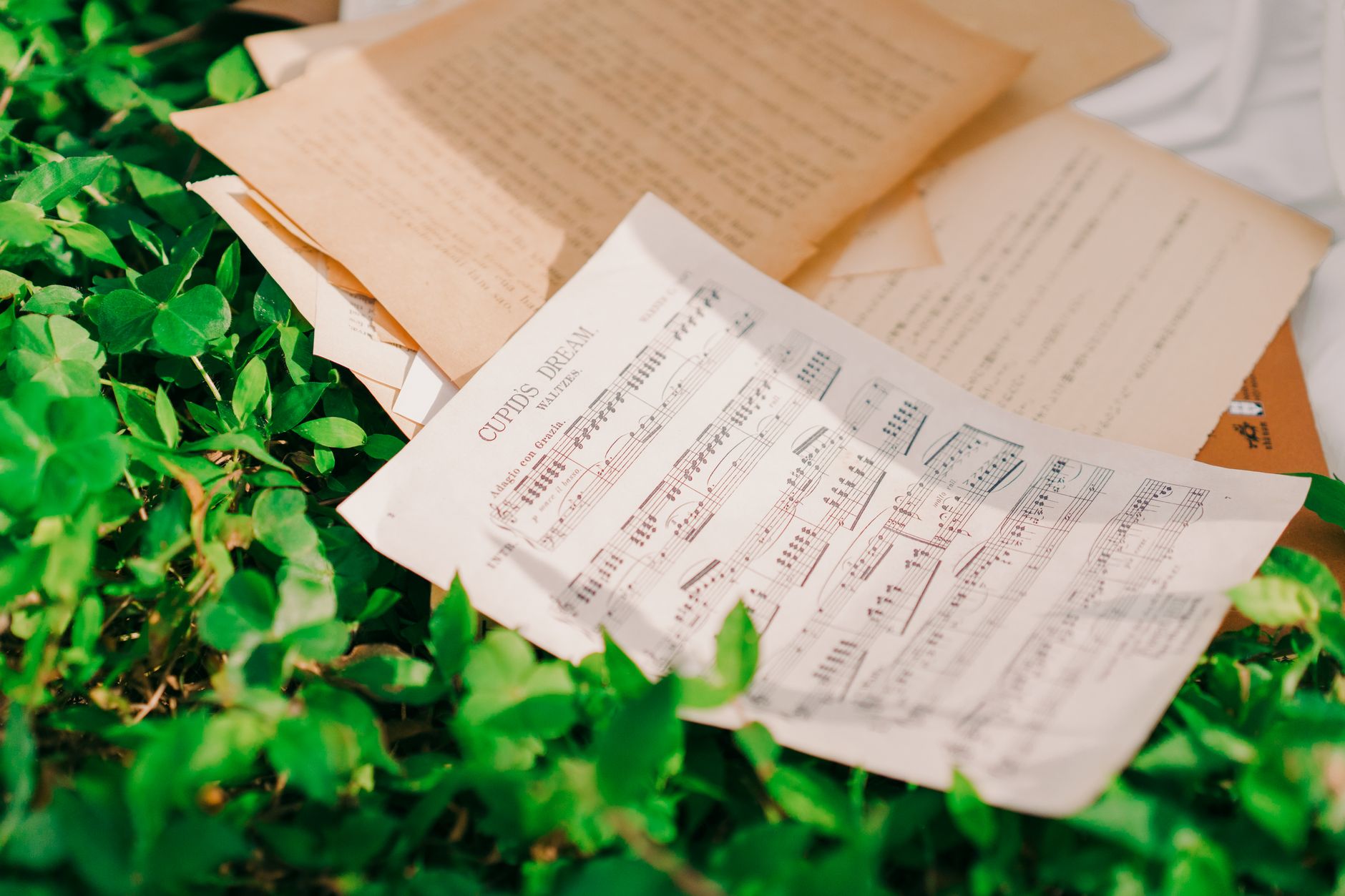
Repurposed wall art doesn't have to start with timber or tin. Old maps and sheets of music are among the most visually rich paper materials you can rescue from an op shop or estate sale, and they translate into striking home decor with very little effort. The aged typography, hand-drawn cartography, and flowing musical notation carry a warmth that printed reproductions simply can't replicate. If you're building a home with intention, these materials deserve a second look.
Why maps and sheet music work so well
Both materials share a quality that makes them ideal for wall art: density of detail. A 1940s road atlas page holds rivers, contour lines, town names, and printed textures that catch the eye from across a room. A page of handwritten or letterpress sheet music offers staves, dynamic markings, and sometimes beautiful illustrated covers that rival any printed poster. Neither requires you to do much beyond presenting them properly.
Aged paper also has an honest quality about it. The yellowing, the foxing spots, the faint pencil marks left by a previous owner — these are features, not flaws. In a world of flat digital prints, a piece of paper that has genuinely lived somewhere is extraordinary.
Where to source them in Australia
Op shops are the first stop, and Salvos and Vinnies stores regularly turn up old atlases, hymn books, and sheet music collections in their book sections. Estate sales in inner-suburban Melbourne and the Dandenong Ranges often yield the best finds: older homes accumulate decades of maps, music, and printed ephemera that families don't know what to do with. The local markets near Belgrave are worth checking regularly, as paper ephemera turns up in stalls alongside vintage wares. Ask stallholders directly — many keep stock under the table that doesn't make it onto display.
One practical note: only repurpose maps and sheet music that are genuinely worn, duplicated, or past their useful life. A rare navigational chart or a first-edition score belongs in a library or specialist archive, not on a wall. For most op shop atlases and hymn books printed in the mid-twentieth century, repurposing is the best outcome available.
Preparation: what to do before you frame anything
Paper from old books needs a little care before it becomes art. Lay each page flat under heavy books for 48 hours. This flattens any curl from being bound and makes framing far easier. If the paper is fragile or brittle, handle it by the edges and work on a clean, dry surface.
Check for active mould or musty dampness. A quick inspection under good light is enough. Lightly musty pages can be aired outside for a few hours on a dry day, but pages with active mould spots aren't worth working with. There's plenty of material out there, so be selective.
Don't wash or wet the paper to "clean" it. The aged patina is the point. A dry, soft brush to remove loose dust is all that's needed.
Five ways to display them as wall art
There's more than one approach here, and the right method depends on what you have and how much time you want to spend.
- Simple framing. A single well-chosen page in a clip frame or a secondhand timber frame is often the most elegant option. Let the paper carry the piece. Align the page slightly off-centre for a more editorial feel.
- Grid arrangements. A 3x3 or 4x4 grid of map pages creates a graphic, almost abstract effect. Use pages from the same atlas for visual consistency, or mix regions for a worldly, layered look. Secondhand frames from the same era as the maps keep the palette cohesive.
- Layered collage. Tear or cut map and sheet music fragments and layer them onto a backing board using a diluted PVA mix. Overlap regions, let musical staves cross topographic lines, and seal the whole piece with a matte varnish once dry. This suits a more eclectic or maximalist interior.
- Decoupage furniture accents. Rather than framing, use small map or music fragments to decoupage a side table, a tray, or the front panels of a drawer unit. This is a natural companion to any project involving repurposed picture frames, where the frame and the art can come from the same salvage source.
- Rolled and suspended scroll. For larger map pages, roll the paper onto a timber dowel at top and bottom and hang it with twine. This works particularly well with old nautical charts or large-format railway maps, which can span a metre or more.
Framing on a budget
New frames are unnecessary. Most op shops stock frames in sizes that fit atlas pages and sheet music perfectly, since both formats are close to A4 or slightly larger. Look for timber frames rather than plastic: timber ages gracefully and holds the vintage register of the paper. Pull out any existing glass and clean it with white vinegar and newspaper. Replace damaged mounts with card cut from thick recycled packaging.
IKEA's RIBBA and HOVSTA frames are an affordable new option if secondhand frames are hard to find in the right dimensions, and both accept non-standard paper sizes with a little trimming of the mount.
Grouping and placement ideas
A single large map page centred above a fireplace works as a statement piece. Sheet music pages suit narrower walls, hallways, and bathroom spaces where a smaller vertical format fits naturally. For a reading nook or study, a dense grid of regional maps creates the effect of a library without the shelf space.
Mix the two materials deliberately: a cluster of sheet music pages flanking a single framed map creates rhythm and contrast. The typography of printed sheet music and the linework of cartography share enough visual language to sit comfortably together. Unifying the frames by painting them all the same matte colour — a deep green, a warm cream, or a raw black — holds a mixed collection together without effort.
Making the most of what you find
The best repurposed wall art comes from knowing your material before you start cutting. Spend time with the pages. A road map might have a beautifully illustrated inset you hadn't noticed. A sheet music cover from the 1930s might carry an Art Deco illustration worth preserving intact. Sometimes the most considered decision is to frame a single page without alteration and let it speak for itself.
That instinct, to see what's already there rather than imposing something new, is at the heart of repurposed design. Old paper carries its own story. The job is to give it a wall.
If you're drawn to working with paper and other forgotten materials, it's worth exploring how glass jars and other overlooked household items can be transformed with the same low-cost, high-character approach.