
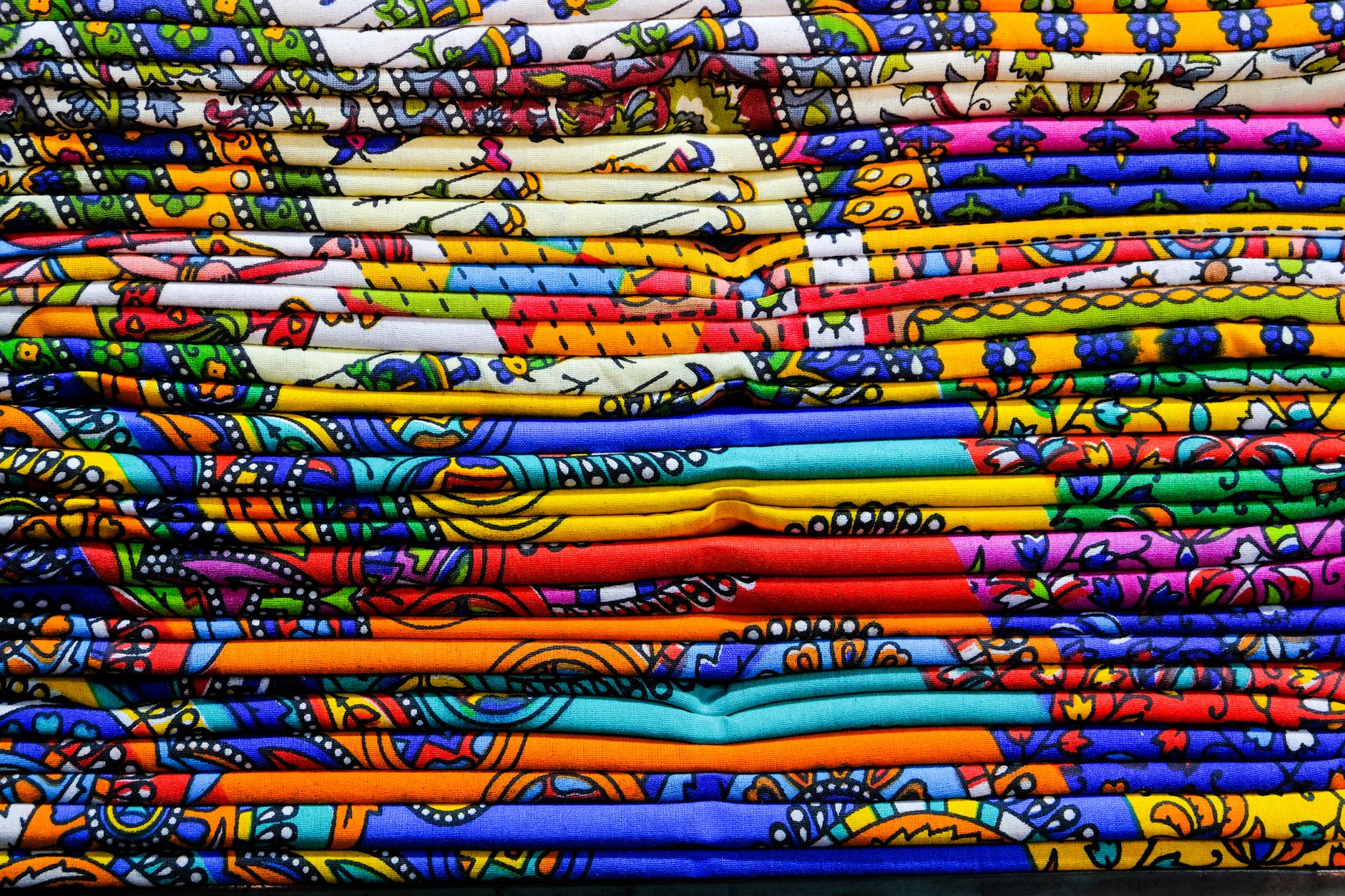
Old curtains and fabric offcuts sit in a strange limbo. Too worn for their original purpose, too substantial for the bin, and too often shoved into a cupboard to gather dust. Repurposed design has a clear answer for them: cut them up, stitch them together, knot them into something new. Fabric is one of the most forgiving materials to work with, and it rewards creativity at every skill level.
EcoSoul Collective stocks repurposed and handmade textile goods at its Belgrave store, and the most common question from customers is how to get started at home. The answer is almost always the same: start with what you already have.
Why fabric makes such good repurposing material
Curtains in particular are dense, wide, and built for longevity. A set of lined cotton drapes holds enough fabric to produce a dozen cushion covers with material left over. Velvet curtains from an op shop can become a draught stopper, a jewellery roll, or the front panel of a patchwork quilt. Sheer voile offcuts work beautifully as produce bags or laundry bags.
The key difference between fabric and materials like timber or ceramic is that the tools are minimal. A pair of sharp scissors, a needle and thread, and a basic sewing machine will handle almost every project listed here. No power tools, no workshop, no special safety gear.
For anyone already exploring repurposed home decor ideas for small spaces, fabric projects are especially practical. They're lightweight, easy to store, and adaptable to any room size.
Five projects worth making from old curtains
1. Cushion covers
This is the most immediate use for heavy curtain fabric. Cut two squares to your preferred size (a 50 cm square suits most sofas), sew three sides together with a 1.5 cm seam, press in the open edge, and add a zip or an envelope closure. A pair of panels from a single curtain yields four to six cushion covers. Patterned curtains from the 1960s and 1970s produce particularly striking results.
2. Table runners
A long offcut needs almost no sewing. Cut to the desired length, fold and press the edges twice, and stitch a narrow hem all the way around. Linen curtains work best here. A 30 cm wide strip running the length of a dining table transforms a plain surface without the commitment of a full tablecloth.
3. Tote and market bags
Medium-weight cotton and canvas curtains are ideal bag material. Cut two rectangles (roughly 35 cm by 40 cm), sew the sides and base, fold the top over twice, and stitch two handles from a long fabric strip. The result is sturdier than most purchased bags because curtain fabric is woven for durability, not economy.
4. Draught stoppers
A draught stopper is one of the few home goods that's genuinely functional and genuinely ugly when bought new. A fabric tube filled with rice or lentils and sewn closed is far more attractive when made from a richly patterned curtain offcut. It also works harder than foam alternatives, conforming to the gap beneath the door rather than sitting loosely against it.
5. Fabric storage baskets
Stiffen a double layer of heavy fabric with iron-on interfacing and you have a box that holds its shape. Cut a base circle or square, sew the sides up, fold the top edge over for a clean finish. These work on shelves, on windowsills, or inside cupboard doors for small items. Velvet curtains make particularly handsome versions.
Working with fabric offcuts and smaller scraps
Offcuts smaller than a standard cushion panel still have plenty of uses. Scraps 20 cm or wider work as drawer liners, book covers, or fabric gift wrapping in the spirit of the Japanese furoshiki tradition. Narrower strips can be braided into pot holders or woven through a simple loom frame to make placemats.
Patchwork is the obvious destination for very small pieces, but don't overlook simpler options. A collection of printed offcuts glued to a canvas frame (with a thin layer of craft glue applied over the top to seal them) makes a textured wall panel that costs nothing and takes an afternoon. It's the same creative principle behind repurposing old maps and sheet music into wall art: flattening materials onto a surface to create something decorative.
Fabric types and what they're best suited for
Not every curtain fabric behaves the same way. Cotton and linen are the most forgiving: they cut cleanly, sew predictably, and press flat without fuss. Velvet requires more care because it marks easily under a hot iron (always press from the reverse side), but it produces the most visually impressive results. Sheer synthetic fabrics fray quickly and need a French seam or a narrow hemmed edge to hold together over time. Brocade and tapestry curtains are heavy and stiff. They're best used for flat applications like wall panels or table runners rather than anything that needs to flex.
When sourcing beyond your own cupboards, op shops in the Dandenong Ranges and Belgrave turn over curtain stock regularly. Estate clearances bring in particularly interesting vintage textiles: mid-century geometric prints, 1980s botanical patterns, and heavy wool drapes that are nearly impossible to find new.
Finishing techniques that make the difference
Raw edges are the fastest way to undermine an otherwise good project. Fraying looks unfinished and weakens seams over time. Three options cover most situations. A simple zigzag stitch on a sewing machine seals the edge without adding bulk. Pinking shears cut a sawtooth edge that reduces fraying on woven fabrics without any stitching. Iron-on hem tape bonds two layers or folds an edge without a machine, which is useful for anyone who doesn't sew.
Pressing seams flat with an iron is the single step most beginners skip and most experienced makers insist on. A pressed seam sits straight, sits flat, and makes every subsequent step easier. It takes about 30 seconds per seam and changes the finished result noticeably.
Storing and sorting your fabric before you start
One of the most common reasons repurposing projects stall is disorganised material. Before cutting anything, sort fabric by weight and type. Heavy upholstery fabric in one pile, medium cotton in another, sheers and linings in a third. Roll each piece and store upright in a box or basket so you can see what you have at a glance. Label rolls with a piece of masking tape noting the approximate dimensions.
This approach mirrors good workshop practice in any material. Whether you're working with timber off-cuts or fabric, knowing what you have before you start prevents the frustration of cutting into a piece you needed whole. The habit also pairs well with broader thinking about household items worth keeping rather than discarding, fabric very much among them.
Old curtains and fabric offcuts won't run out of applications. Once you've made a cushion cover, a tote bag, or a draught stopper, the next project tends to arrive on its own. The material suggests the use.