
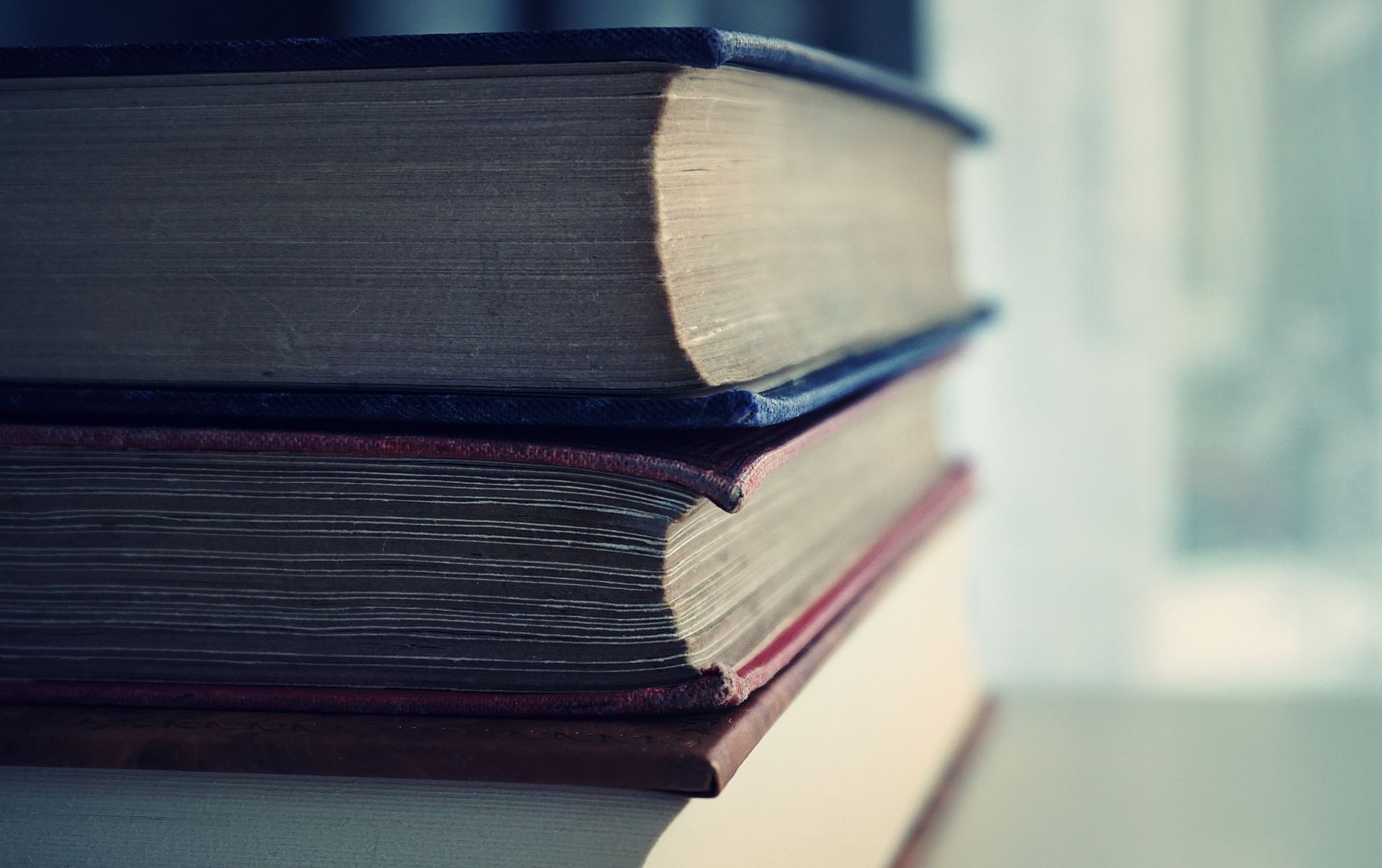
Repurposed book projects are one of the most accessible entry points into upcycled home decor. Books are plentiful at op shops, estate sales, and garage clearances, they're cheap, and they carry a texture and history that no flat-pack alternative can replicate. Whether you're working with a single oversized atlas or a full set of encyclopaedias with nowhere to go, there's a project here worth trying.
Why old books are such good raw material
Most damaged or unwanted books can't be donated or resold. Their spines crack, their pages yellow, their covers warp. Op shops often reject them. That leaves two options: landfill or a second life as something else entirely.
Books bring specific advantages to repurposed design. The pages compress and hold shape. The covers provide a rigid surface for painting or decoupaging. The spines stack well, create rhythm when grouped, and display text that adds instant character. A stack of vintage hardcovers in earthy tones can anchor a shelf or side table the way no purpose-built object quite manages.
If you're already interested in repurposing old window frames into home decor, books follow a similar logic: everyday objects that most people overlook hold genuine design value once you start seeing them differently.
Folded book art: a project anyone can try
Folded book sculptures are probably the most recognisable book repurposing project, and for good reason. They need no tools, no paint, and no special skills. The principle is straightforward: each page is folded inward to a marked angle, and repeated across hundreds of pages, the folds build up into a three-dimensional shape, a heart, a tree, a letter, a star.
You'll want a hardcover book with at least 200 pages. Paperbacks work, but they're harder to keep upright once shaped. Mark your fold points lightly in pencil, fold each page to the line, and crease firmly. The finished sculpture sits upright on its own spine and needs no frame or support.
Natural hardcovers in cream, tan, or faded green work beautifully displayed on a windowsill or mantle. They look considered without being fussy.
Hollowed book boxes and hidden storage
A hollowed book is a classic project for good reason. It's functional, it looks exactly like a regular book on a shelf, and it's genuinely useful for storing small valuables, jewellery, or remote controls you'd rather not see.
Choose a thick hardcover (at least 4 cm deep). Glue the pages together in sections using diluted PVA, let them dry completely, then cut out the interior with a sharp craft knife. Sand the inside edges smooth. Line the cavity with fabric offcuts or decorative paper for a finished look.
Grouped with genuine books on a shelf, a hollowed volume is invisible. That's the point. It's storage that doesn't announce itself.
Book page wall art and decoupage
A single old atlas or illustrated encyclopaedia can supply enough page material for an entire gallery wall. Individual pages, mounted in simple frames, become prints that cost almost nothing but read as intentional, collected pieces.
Botanical illustrations, antique maps, sheet music pages, and technical diagrams from old textbooks all translate well. Frame them uniformly for a cohesive look, or vary the frames deliberately for something more eclectic. A loose grid of 6 botanical prints in matching timber frames is a strong focal point for a bedroom or hallway.
For decoupage projects, torn or cut book pages can cover furniture surfaces, lamp bases, vases, or trays. Seal with two or three coats of matte medium for durability. The result is tactile and warm in a way that printed wallpaper can't quite match.
Book page lighting: a surprisingly easy project
Book pages are translucent when backlit, which makes them a natural material for simple pendant lamp shades or tea light holders. For a tea light holder, roll individual pages into tight cones or tubes and secure them with a small amount of craft glue. Pack them around a glass jar and the light filters through the paper in a warm, amber tone.
For pendant shades, pages folded into geometric shapes can be assembled around a basic wire frame. This takes more patience than the other projects here, but the result is genuinely striking. Use pages from books with interesting typography or illustrations, since the print shows through the shade when the light is on.
Keep all candle-based projects behind glass, not directly against paper. The warmth of an LED tea light is safer and still produces the same glow.
Stacked book furniture and display risers
Large hardcovers, particularly dictionaries, legal volumes, and oversized art books, stack into surprisingly sturdy pedestals. A tower of four or five well-chosen hardcovers becomes a side table riser, a plant stand, or a display base. Stack them with their spines facing out, choose books with colour-coordinated or complementary covers, and the arrangement reads as deliberate rather than haphazard.
To make a stacked book side table permanent, apply wood glue between each layer and clamp overnight. Add a small piece of toughened glass (cut to order at any glazier) on top and you have a functional, one-of-a-kind piece that draws more comments than almost anything bought new.
This kind of thinking sits comfortably alongside repurposing old pallets into functional furniture: the material does the design work when it's chosen thoughtfully.
Where to find old books worth repurposing
Op shops are the most consistent source. Damaged paperbacks and outdated reference books are usually in the 50-cent bin. Estate sales often turn up complete sets of vintage encyclopaedias or hardcover series that op shops no longer accept. Garage sales and Facebook Marketplace are worth checking for bulk lots.
When you're selecting books for craft projects, prioritise covers and pages over condition. A cracked spine doesn't matter if you're folding the pages. A faded cover doesn't matter if you're covering it in fabric. The things that make a book unsellable as a book are irrelevant to its value as a material.
EcoSoul Collective stocks a rotating selection of repurposed and handmade home decor in Belgrave, including pieces made from reclaimed paper, fabric, and found objects. If you'd rather buy a finished piece than make one, it's worth visiting to see what's currently on the shelves.
One rule that applies to every project
Don't repurpose books that have genuine cultural, historical, or collector value. First editions, illustrated antiques, and regionally significant publications deserve preservation, not decoupage. If you're unsure whether a book is worth something, a quick search of its title and edition takes thirty seconds and could save a piece of real history.
Everything else is fair game. The battered 1987 World Almanac, the ex-library copy with stamps on every page, the water-damaged hardcover with the gold embossed spine: these are exactly the books repurposed design was made for.