
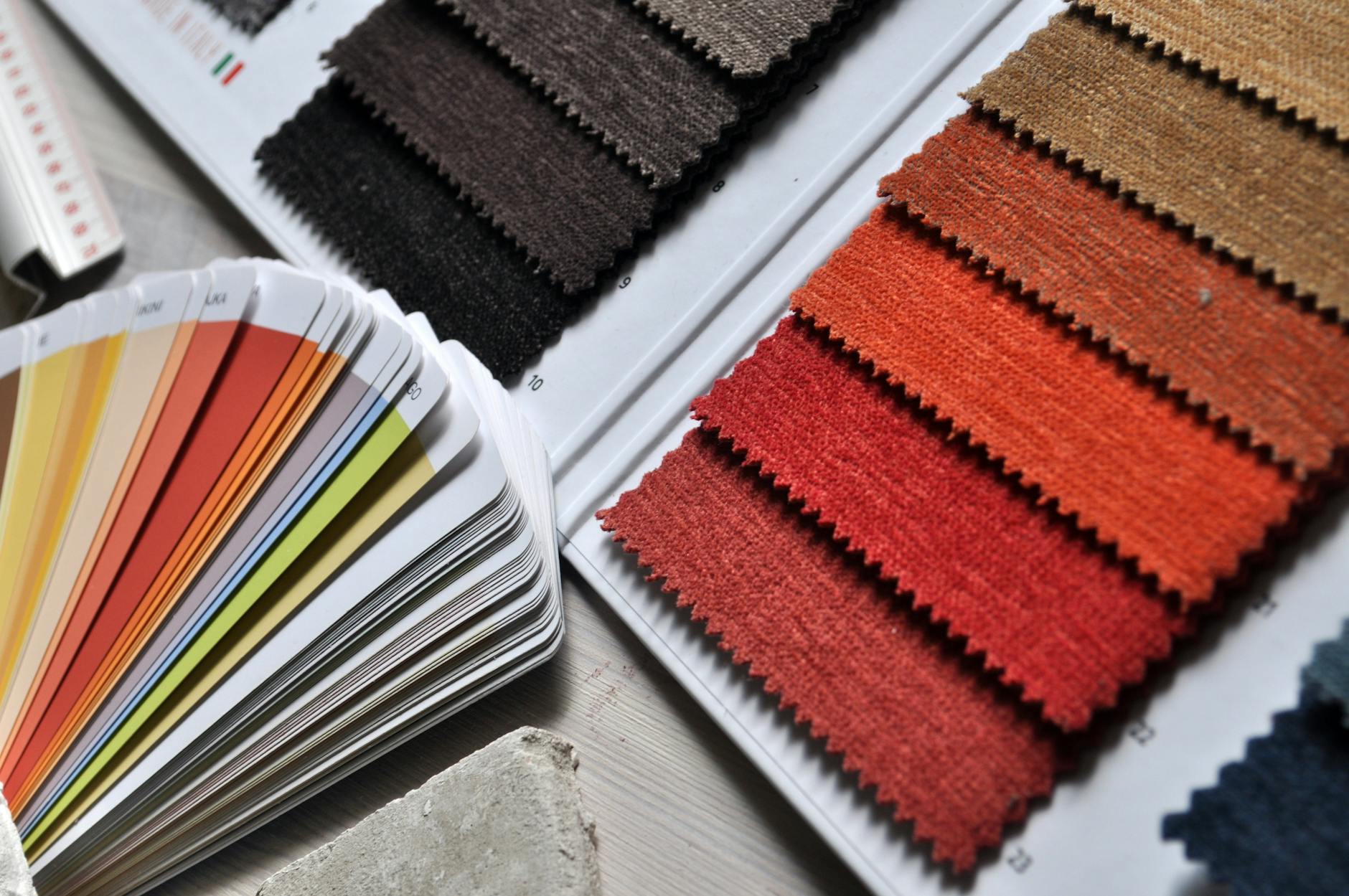
Vintage fabric swatches turn up in the strangest places: folded into estate sale boxes, bundled at the bottom of a market basket, tucked inside old sewing kits at op shops across the Dandenong Ranges and Melbourne's outer suburbs. Most people walk straight past them. Those who stop and look find one of the most versatile and affordable display materials around. A single swatch of mid-century barkcloth, a panel of hand-blocked Indian cotton, or a strip of 1960s geometric upholstery fabric can carry more visual weight on a wall than a framed poster three times its price.
Why fabric swatches work as wall art
Textile art has been part of interior decoration for centuries, but the idea of using small individual swatches rather than full tapestries or quilts is a more modern instinct. It suits contemporary living: smaller spaces, rotating collections, and a preference for objects with a story. A fabric swatch is tactile in a way that a print can't be. The weave, the hand-stamped edge, the slight irregularity of the dye all communicate age and craft at a glance. Grouped together, swatches from the same era create a cohesive narrative. Mixed deliberately across periods, they produce something more complex. If you're already thinking about how to mix vintage eras without your home looking cluttered, fabric swatches give you a low-commitment way to test combinations before committing to furniture.
Where to source vintage fabric swatches
Fabric swatches come from several distinct channels, and each tends to yield different types of material.
- Op shops and charity stores: Look in the craft and haberdashery sections, not just the fabric roll racks. Sample books from furnishing fabric ranges often end up here intact, with dozens of swatches still bound together.
- Estate sales and clearing auctions: Homes belonging to former dressmakers, upholsterers, or textile hobbyists frequently include stashes of sample fabric from the 1950s through to the 1980s.
- Textile and haberdashery dealers: Some specialist dealers sell bound sample books directly. The Design Library in Melbourne stocks archival textile samples and reference books that are worth visiting if you want to source with intention.
- Market stalls: Garage sales and local markets near Belgrave and the Ranges regularly surface sewing ephemera. Knowing how to source vintage pieces at garage sales like a pro will help you work these quickly and find the best fabric before anyone else does.
How to prepare swatches for display
Most vintage fabric needs a small amount of preparation before it goes on the wall. It doesn't need to be much. A light hand-wash in cool water with a gentle soap removes dust and storage smells without damaging aged fibres. Lay flat to dry on a clean towel. Never ring or tumble dry a vintage swatch.
Once dry, pressing is the step most people skip and then regret. Use a cool iron with a pressing cloth between the iron and the fabric. Heat damage is irreversible on aged textiles, particularly synthetics from the 1960s and 1970s, which can melt or shrink under a hot iron. If you're unsure about the fibre content, start with the lowest heat setting and work up slowly.
Swatches with frayed edges have two options. You can leave the fraying as a feature: it reads as authentic and handmade, particularly in a natural-fibre piece like linen or cotton. Or you can fold the edges under and secure with a small amount of fabric glue along the hem before framing. Neither approach is wrong. The choice depends on the swatch and the frame you're using.
Framing and mounting options
The simplest display method is a standard deep-set picture frame. Remove the glass for textile display whenever possible. Fabric under glass traps moisture and can develop mould over time, particularly in older homes with variable humidity. A frame without glass also lets the texture read properly from across the room, which is the whole point.
Stretch the swatch over a piece of cardboard cut to size, then secure the edges at the back with acid-free tape or small pins. Slide the mounted swatch into the frame. For thicker upholstery fabrics, use a piece of foam board as the backing instead of cardboard. It accommodates the extra depth and keeps the swatch taut without distorting the face.
Embroidery hoops are a faster alternative and suit smaller swatches well. A 20 cm hoop fitted with a swatch of vintage needlework or printed cotton has a charm that a rectangular frame sometimes can't match. Mix hoop sizes for a more organic grouping on the wall. Use a 30 cm hoop as an anchor and work smaller pieces around it.
For a looser, gallery-style display, wooden dowels work well. Fold the top edge of the swatch over a 6 mm wooden dowel, secure with a few stitches or a thin bead of fabric glue, and hang from a piece of linen cord tied at each end. This method suits longer, narrower pieces such as border samples or dress fabric lengths. It reads slightly more contemporary than a frame, which can help the display sit comfortably in a modern room.
Arranging swatches as a wall composition
A single framed swatch works as a focused accent. Three or more swatches open up into something bigger: a textile gallery wall. The principles are similar to any gallery arrangement but with one additional consideration. Colour harmony between fabrics matters more than it does with prints, because the eye reads textiles as warmer and more complex than paper. Two swatches that look fine in separate rooms can fight each other on the same wall if their undertones conflict.
Lay your frames flat on the floor before hanging anything. Arrange them until the grouping feels balanced, then photograph it on your phone. That distance, looking at the arrangement on a small screen, reveals problems the naked eye at close range misses. Gaps that felt considered in person often look scattered from a distance, and frames that seemed too close together usually need to be pulled apart by another 5 cm.
Colour-block arrangements, grouping by palette rather than by era, tend to suit open-plan living spaces where the wall needs to hold its own from across a large room. Era-based groupings, where all the swatches share a decade or movement, suit reading nooks, hallways, and smaller rooms where the viewer gets close enough to appreciate the story. For a narrower space such as a hallway, a vertical stack of three matching hoops or frames almost always works.
Caring for fabric wall art over time
Dust is the main enemy of displayed textiles. A light pass with a soft brush attachment on a vacuum cleaner (held several centimetres from the surface, not pressing against the fabric) every few months is enough to keep most swatches looking fresh. Direct sunlight fades vintage fabric fast. Position textile displays away from windows that receive afternoon sun, or use UV-filtering glass if the swatch is too precious to risk.
If a displayed swatch starts to sag in its frame over time, it needs to be re-stretched. This is a ten-minute task with a craft knife and fresh tape. It's worth doing promptly because a sagging swatch reads as neglected rather than vintage, and that's a different mood entirely.
Vintage fabric swatches are small, inexpensive, and genuinely irreplaceable. The geometric barkcloth produced in Melbourne's textile mills during the 1950s isn't being made again. Neither is the hand-blocked Indian cotton that arrived in Australian haberdashery stores in the 1970s. Giving a swatch a frame and a spot on the wall is one of the quietest ways to preserve something worth keeping.