
The vintage kitchen is one of the most searched and most misunderstood spaces in retro-inspired interiors. Done well, it combines the warmth of pre-loved materials with a layout that actually holds up to daily cooking. Done poorly, it becomes a collection of pretty objects with nowhere to prep a meal. The good news is that the most functional kitchens in history were built between the 1920s and 1970s, which means vintage design and practical design are not as far apart as people assume.
Start with the bones, not the accessories
Before you bring in a single enamel canister or retro appliance, look at what your kitchen already offers structurally. The goal is to layer vintage character over a layout that works, not to rebuild from scratch. If you have open shelving, that's an asset. Solid timber cabinetry, even if painted over, is a foundation worth restoring. Original floor tiles, pressed metal splashbacks, and chunky benchtops from an earlier era are worth preserving wherever possible. These structural elements carry far more visual weight than any decorative piece you could add later.
If you're working with a modern or renovated kitchen, focus on surfaces and hardware first. Swapping flat-bar handles for cup pulls in brushed brass or black iron instantly shifts the period feel. A butcher block timber insert over part of your laminate bench costs relatively little but anchors the whole aesthetic in something warm and tactile.
Choosing vintage kitchenware that earns its place
The easiest trap in a vintage kitchen is filling it with beautiful objects that create clutter. Every pre-loved piece you bring in should justify its space by being either genuinely useful or genuinely striking, ideally both. The most sought-after vintage kitchenware in Australia tends to hit that mark: cast iron pans, heavy ceramic mixing bowls, glass storage jars, enamelware, and timber utensil holders all look the part while handling serious daily use.
Prioritise pieces with a proven lifespan. A cast iron skillet from a 1960s op shop will outlast any non-stick pan on the market today. A set of Pyrex nesting bowls in their original colours is dishwasher-safe, chip-resistant, and genuinely beautiful on a shelf. Enamel bread bins and canisters seal well, hold up to moisture, and require no special care. When you're choosing between a decorative reproduction and an authentic vintage piece, the original nearly always performs better and carries a history that no factory-made item can replicate.
Storage solutions that feel vintage but work hard
Storage is where most vintage kitchens either succeed or fall apart. Open shelving is the cornerstone of the look, but it only works if you're willing to edit what goes on display. Use the top shelves for pieces you want to show: stacked ceramic plates, glass jars filled with dried goods, a line of matching enamel tins. Reserve lower shelves and drawers for the less photogenic but essential items: appliances, cleaning supplies, excess stock.
A freestanding timber dresser or pantry cupboard is one of the most practical additions to a vintage kitchen. It adds significant storage without requiring a renovation, and it can move with you if you rent. Look for pieces with deep shelves at the bottom, adjustable middle shelves, and shallow display shelves at the top. These proportions are found in most genuine kitchen dressers from the 1930s to 1960s, and they make sense because cooks of that era designed them to be used, not admired.
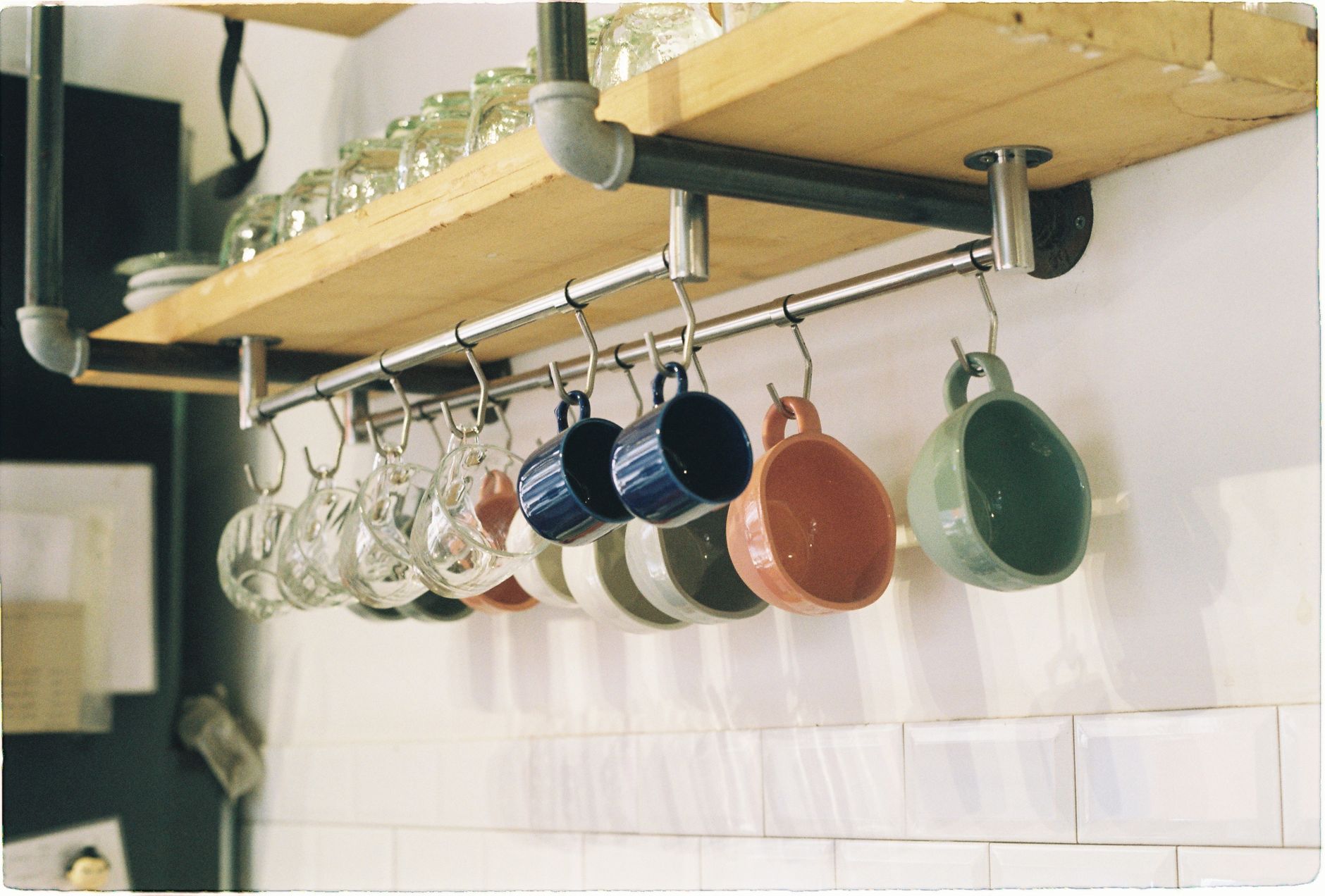
Hooks are underused in modern kitchens and were standard in older ones. A row of cast iron hooks along a timber rail above the sink or beside the stove puts frequently used items within easy reach: colanders, measuring cups, oven mitts, tea towels. This keeps your benchtop clear and adds to the layered, lived-in quality that makes a vintage kitchen feel authentic rather than staged.
Appliances: balancing aesthetics and performance
Modern appliances are often the awkward element in an otherwise cohesive vintage kitchen. The simplest approach is to work with neutral tones where you can. A cream or black appliance reads far more sympathetically in a retro space than a stainless steel finish. Several Australian appliance brands now produce retro-styled toasters, kettles, and stand mixers in period-appropriate colourways, and while they are reproductions rather than originals, they fill a practical gap that genuine vintage appliances cannot always cover safely.
For larger appliances, concealment is usually more effective than replacement. Panel-ready dishwashers and refrigerators can be fitted with timber or painted fronts that disappear into the cabinetry. If that's beyond your budget, positioning appliances where they're less visible, or behind a curtain in an open pantry space, keeps the main sightlines clean.
Colour, texture, and light
Vintage kitchens are defined as much by their palette as their furniture. Think duck egg blue, deep sage, warm cream, terracotta, and soft buttermilk rather than stark white or cool grey. These colours appear on walls, cabinetry, and tiles in authentic mid-century and earlier kitchens, and they work because they're warm enough to make the space feel welcoming without competing with the patina of pre-loved pieces.
Texture matters as much as colour. A flat-painted wall reads as modern even in a period colour. Adding a ceramic tile splashback, a jute or coir runner on the floor, linen curtains instead of blinds, or a timber shelf bracket introduces the layering that makes a space feel genuinely old rather than newly decorated in an old style.
Lighting is often overlooked. An exposed filament bulb in a simple pendant fitting above the sink or island costs very little but immediately softens the kitchen and reinforces the period feel. Avoid recessed downlights where you can; they are one of the fastest signals that a kitchen is contemporary regardless of everything else around them.
Finding pieces without the overwhelm
A vintage kitchen comes together gradually, and that's part of what makes it satisfying. Op shops, estate sales, local markets, and stores like EcoSoul Collective in Belgrave are all worth exploring regularly rather than all at once. The best pieces appear when you're not actively looking for anything specific, which means building a list of what you need and keeping an eye out over time rather than trying to complete the look in a single weekend shop.
If you're new to hunting for vintage pieces, knowing how to navigate estate sales and auctions will help you find quality kitchen furniture at prices well below what the same pieces fetch in curated vintage shops. Take measurements with you, know what colours you're working with, and don't rush. A kitchen styled over six months with pieces you genuinely love will always outperform one assembled in a single hurried afternoon.
The result, when you get there, is a kitchen that feels deeply personal, uses honest materials, and works harder than it looks. That combination is what vintage design has always done best.