
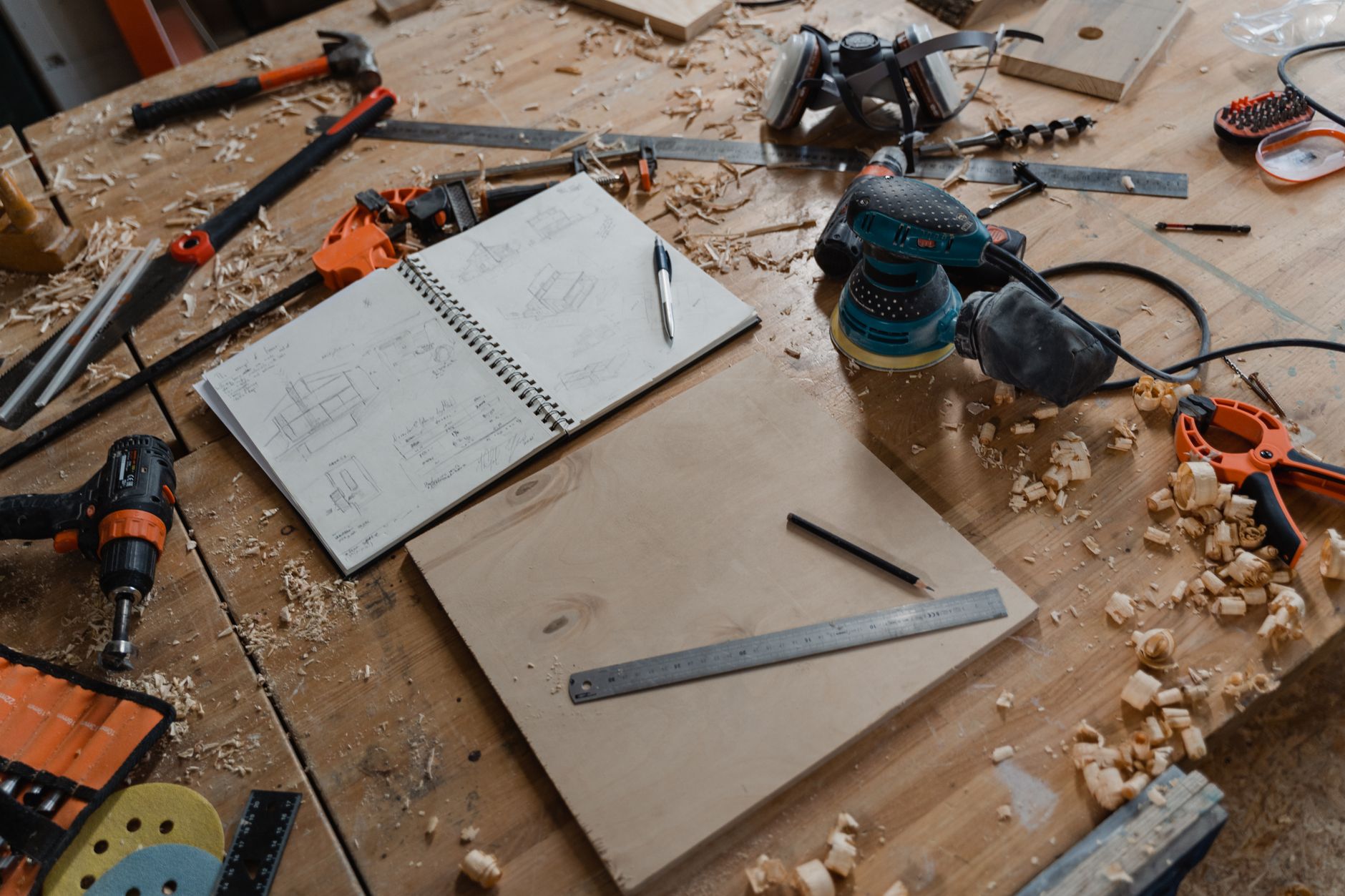
Every handmade business has a story worth telling. Most makers just don't know how to tell it. The result is an About page that lists facts, a product description that recites materials, and a brand that feels competent but forgettable. Buyers connect with people, not products. Getting that story onto the page, clearly and honestly, is one of the highest-return things a maker can do.
Why your story is a sales tool, not a vanity exercise
When someone chooses a handmade piece over a mass-produced alternative, they're not just buying an object. They're buying into a decision someone made, a skill someone built, and a value someone holds. Why people pay more for handcrafted items comes down to meaning, and meaning requires a storyteller. Your story is what supplies that context.
This isn't sentiment. It's purchasing psychology. A buyer who knows your origin, your process, and your reason for making is far more likely to complete a purchase, return for more, and refer friends. They feel ownership of something more than a transaction. That loyalty is worth more than any single sale.
The mistake most makers make is treating the story as a courtesy, something to fill the About page and then forget. In reality, your story belongs in your product listings, your social captions, your market stall signage, and your packaging. It isn't a section. It's the current running through everything.
The three elements every maker's story needs
A strong maker's story doesn't need to be long. It needs three things: a clear origin, a stated craft, and a genuine reason the work matters. Strip out anything that doesn't serve one of those three.
The origin. Where did this start? Not just "I've always loved making things" but a specific moment: the market stall you wandered into at age twelve, the woodworking shed you inherited from your grandmother, the frustration that made you put down mass-produced goods and pick up a tool instead. Specificity creates believability. Vague enthusiasm creates nothing.
The craft. What do you actually make, and how? You don't need to publish a full tutorial, but buyers want to understand the skill involved. Name the techniques, the materials, the time it takes. "Hand-thrown on a kick wheel using locally sourced stoneware" tells a far richer story than "handmade ceramics." If your process is distinctive, that distinctiveness is the story.
The reason it matters. Why does this work exist in the world? What problem does it solve, what value does it hold, what does it stand against? For many makers, this is where sustainability, community, or craft preservation enters the picture. Don't reach for a noble cause if it isn't yours, but if you genuinely make from reclaimed materials because landfill bothers you, say that plainly. Buyers respond to conviction.
How to find the real story (when you feel like you don't have one)
Most makers who claim they "don't have an interesting story" are wrong. They just haven't been asked the right questions. Try answering these in writing, without editing yourself:
- What made you start making this specific thing rather than something else?
- What did you have to learn the hard way?
- Who or what shaped the way you work?
- What would stop if you stopped making?
Read back through those answers. The sentences that feel slightly embarrassing or too personal are usually the ones worth keeping. Authenticity reads as vulnerability on the page, and that's precisely what builds trust.
If you run a studio in Belgrave or the Dandenong Ranges, your place is also part of your story. The light through a fern gully, the Saturday markets, the community of makers working nearby: these are details that locate your work and give buyers a sense of belonging to something beyond the product itself.
Adapting your story for different formats
Your full maker's story might run to 300 words on an About page. That same story needs to compress into two sentences for an Instagram caption, one sentence for a market sign, and a single phrase for a product label. Practice writing it at every length until you can do each version without losing the essential truth.
For product listings specifically, your story appears in the details. Knowing how to write product descriptions that actually sell handmade goods means weaving origin and craft into each individual item, not saving the story for the About tab most buyers never click. A listing that opens with "Hand-stitched in my studio from reclaimed linen, this pouch started as a protest against single-use plastic bags" is doing twice the work of one that opens with dimensions and colour options.
On social media, your story lives in process. Show the workspace, the early mistakes, the material before it becomes the product. Narrate in captions that move from specific moment to broader meaning. "This is the piece I almost binned last Tuesday" is a better opening than "New stock just dropped."
Common mistakes that kill connection
The biggest one: writing for approval rather than truth. Makers often scrub their stories clean of anything that sounds difficult, uncertain, or small-scale. The result is a professional-sounding nothing. Buyers are not looking for a polished brand statement. They're looking for a person they'd trust to make something for their home.
Second: burying the lead. Start with the most interesting thing, not the most chronologically logical thing. "I quit my accounting job to make furniture from demolished pub timbers" is a better opener than "I've been interested in woodworking since I was young."
Third: treating the story as finished. Your story is a living thing. It grows as your craft deepens, your materials change, and your community expands. Update it. Let buyers who've followed you for two years see that something has shifted. That's not inconsistency; it's evidence that a real person is at the bench.
Putting it to work across your business
Once your story is clear, it should run through every customer touchpoint. Your Instagram presence becomes more coherent when it's anchored to a clear maker's narrative rather than a scattered mix of product shots. Your market conversations become easier because you're not improvising from scratch each time. Your packaging, your thank-you notes, and your email replies all carry the same thread.
Buyers who know your story become advocates. They retell it when they give your work as a gift. They mention it when friends ask where that piece on the shelf came from. A well-told maker's story doesn't just convert browsers. It multiplies, carried forward by the people who felt something when they read it.
Write it honestly. Write it specifically. Then put it everywhere.